
Digital Marketing
Top Digital Marketing Company
GoodFirms · 2026
WEB PORTAL DEVELOPMENT
Give customers, vendors, partners or employees one secure place to access information, complete tasks and interact with the systems behind the business.
70+
Sites and Apps
4 to 6
Weeks for MVPs
95%
Client Retention
TRUSTED BY TEAMS ACROSS 18+ INDUSTRIES











Digital Marketing
GoodFirms · 2026
PPC Management
Clutch · 2026

PPC Management
Clutch · 2026

Web Development
TECHIMPLY · 2026

Digital Marketing
DesignRush · 2025

IT Service Management
Clutch · 2025

SEO Services
Clutch · 2025

Social Media Marketing
DesignRush · 2025

Web Development
DesignRush · 2025
BUILD CAPABILITIES
Portal architecture should reflect who uses it, which tasks they complete and which business systems own the underlying data.
Discuss Your BuildROLE BASED SELF SERVICE
Moving a process online creates value only when roles, information, decisions and ownership become clearer.
ROLE BASED SELF SERVICE
Moving a process online creates value only when roles, information, decisions and ownership become clearer.
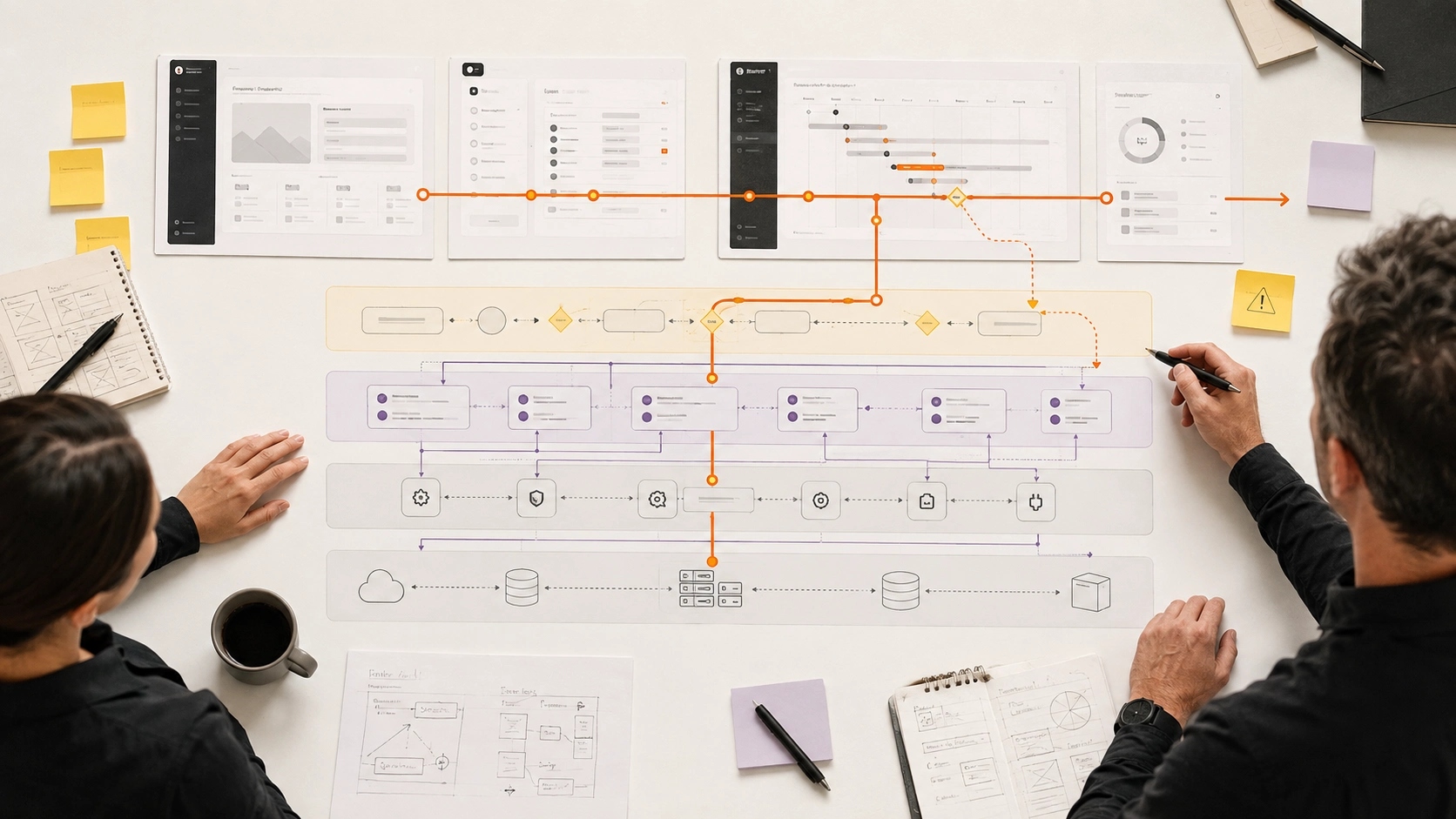
Customers, vendors, partners, employees and administrators need different access and actions. We map each role, the information it can view, the tasks it can complete and the handoffs it creates. This prevents one oversized dashboard from exposing irrelevant choices or sensitive data to every user.
A portal should make status, responsibility and the next action clear. We define requests, submissions, approvals, documents, messages and exceptions as complete workflows rather than isolated forms. The surrounding notifications and administrative queues are planned with the customer facing experience so work does not disappear after submission.

Portal data may belong to CRM, ERP, ecommerce, payment, document or support platforms. We map the source of truth, API boundaries, update direction and failure handling before integration. Manual review can remain where judgement is required, but duplicate entry and unclear ownership should not be designed into the process.
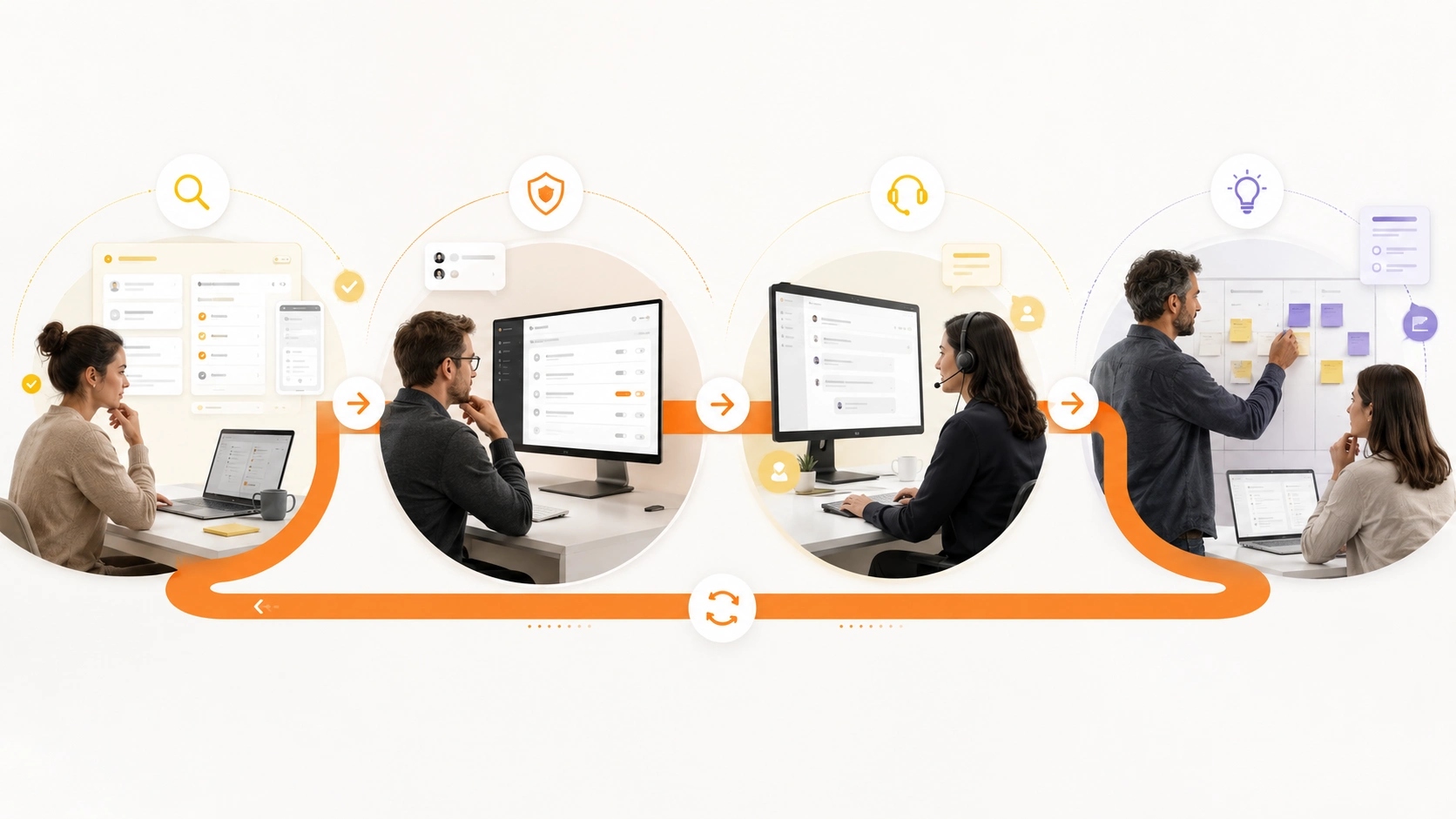
Identity, permissions, audit history, data retention and support are part of portal design. We plan how users are invited, changed and removed, how administrators review activity and how releases are tested. A portal becomes dependable when operating ownership is as clear as the interface.

We select from the fixed development stack according to product experience, architecture, integrations, deployment, maintenance and the team responsible after launch.
43+
tools & platforms
Step 01 of 06
Identify user groups, access boundaries, priority tasks, service expectations and the teams responsible behind each journey.
Step 01 of 06
Identify user groups, access boundaries, priority tasks, service expectations and the teams responsible behind each journey.
Identify user groups, access boundaries, priority tasks, service expectations and the teams responsible behind each journey.
Each capability is configured around the users, workflows and systems that the portal must serve.
Give each user group only the information and actions required for its responsibilities.
Connect submissions, validation, approvals, exceptions and status through clear states.
Support controlled upload, access, review and version context where the use case requires it.
Send useful updates tied to workflow events, preferences and the correct return destination.
Connect CRM, ERP, payments, support or other source systems through defined ownership.
Give authorised teams operational queues, change context and traceable activity.

Verified on Google Reviews
“Absolutely Exceptional – There are truly no words to fully justify the incredible professionalism and unmatched work ethics that Flashyminds brought to our project. ”
Neeraj Pathania
Atulya Kanchi Camps
Co-founder

Verified on Sortlist
“Flashymind team was very cooperative and listened to every aspect and feedback in a very constructive way ensuring delivery abide expectations.”
Ashish Ranjan
Arja For Wildlife
Founder
Verified on Google Reviews
“Great team , I had an excellent experience working with flashyminds . Their team is responsive and committed to delivering results. Highly recommend. ”
Sravan
Edurights India
Managing Director
SELECTED WORK
01 — 05
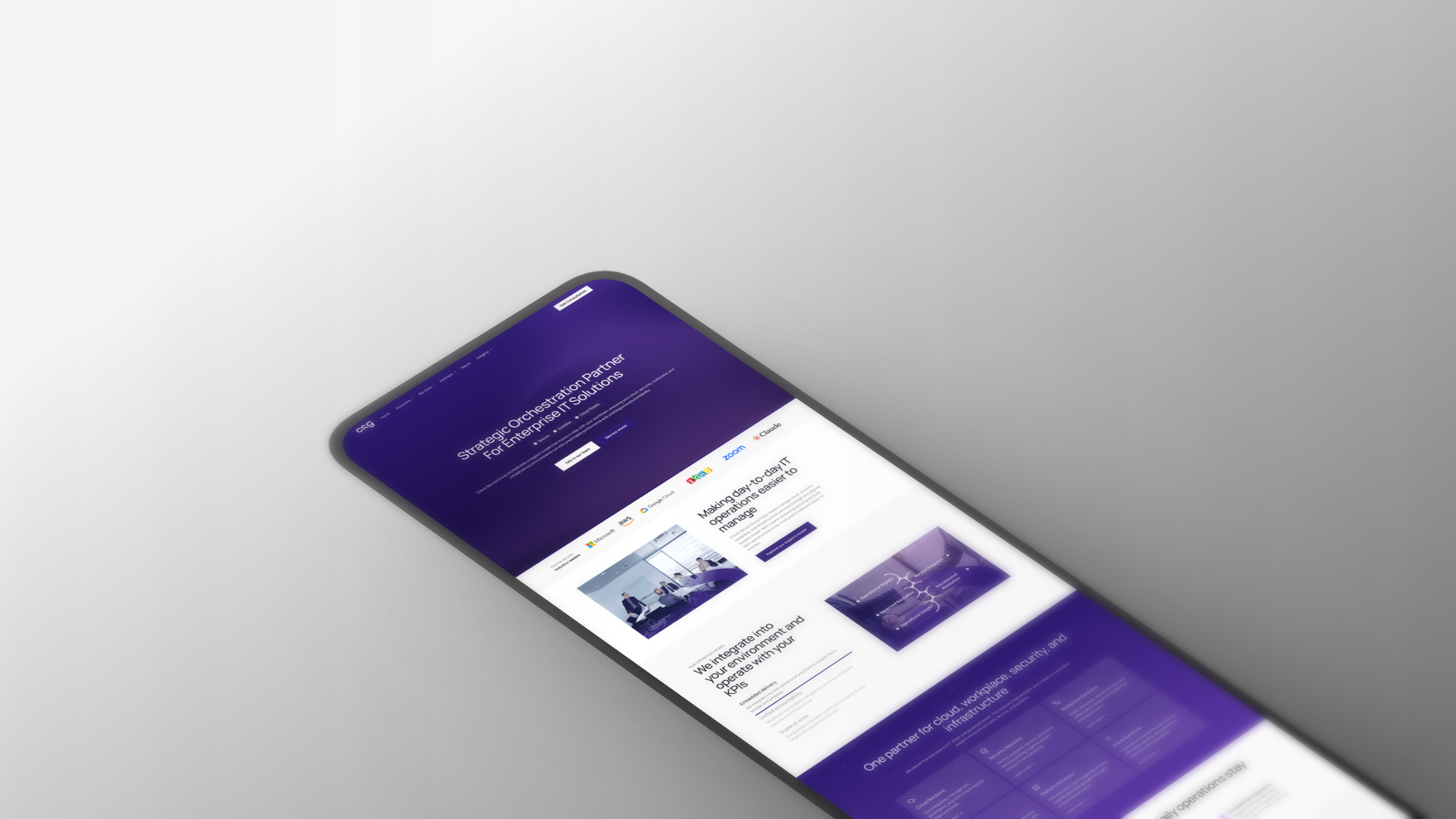 Strategy & IdentityEnterprise brand system
 Brand SystemBottled water identity
 Identity & PackagingBespoke fashion brand
 Complete IdentityLogo & visual system
 Full IdentityVisual system delivery
A fixed industry taxonomy keeps every page, filter, and icon aligned while editors can still add useful short descriptions.
Ecommerce Development
Aug 19, 2026 · 6 min read
A storefront creates sustainable growth only when product, inventory, pricing, account, order, fulfillment, return, and customer-service information remains consistent across the.
By Research Team
Read articleSEO
Aug 19, 2026 · 6 min read
Marketplace filters can create millions of URL combinations, so indexability should follow stable customer demand and useful landing-page value rather than every possible.
By Research Team
Read articleWeb Development
Aug 19, 2026 · 6 min read
A corporate website should help procurement and risk teams verify the company, capability, safety, quality, accessibility, delivery process, and responsible contacts before.
By Research Team
Read articleWeb portal development can include discovery, role and permission design, UX, dashboards, forms, workflows, document handling, notifications, administration, APIs, testing, deployment and support. Portals may serve customers, vendors, partners or employees. Flashyminds maps the user tasks and the internal teams or systems responsible for each outcome before selecting the architecture and implementation scope.
PLAN THE RIGHT BUILD
Share the product goal, users, current systems, required platforms, integrations, content readiness and release expectations. We will identify the clearest next step and the decisions needed before delivery.


