


Receiving and Inspection
Capture expected receipts, discrepancies, quality status and ownership before stock becomes available.
WAREHOUSE MANAGEMENT
Select, implement and connect the right warehouse management platform, or develop a tailored system when standard software cannot support the workflow.
TRUSTED BY TEAMS ACROSS 18+ INDUSTRIES








The shortlist is based on workflow fit, integrations, administration, security, compliance needs and total ownership, not brand popularity alone.
Complex warehouse networks already using SAP and requiring advanced execution, automation and supply chain integration.
Available Services
Complex warehouse networks already using SAP and requiring advanced execution, automation and supply chain integration.
THREE DELIVERY PATHS
The recommendation depends on process fit, existing investment, integration limits, risk, ownership and long term change.
Discuss Your WorkflowThe scope is selected from the workflows warehouse operators, supervisors, inventory control, transport and customer service teams need to complete and govern.
Capture expected receipts, discrepancies, quality status and ownership before stock becomes available.
Use product, location and capacity rules to guide storage while allowing controlled exceptions.
Coordinate order, wave, batch or zone work around priorities, stock availability and operator capacity.
Validate items, packaging, labels, carrier handoff and shipment records before an order leaves.
Route returned goods through inspection, grading, quarantine, restock or disposal decisions.
Connect scanners, printers, conveyors or robotics through supported and observable interfaces.
FROM WORKFLOW TO SYSTEM
A WMS must reflect the physical warehouse, equipment and exception paths, not force operators to work around a diagram made in an office.
FROM WORKFLOW TO SYSTEM
A WMS must reflect the physical warehouse, equipment and exception paths, not force operators to work around a diagram made in an office.
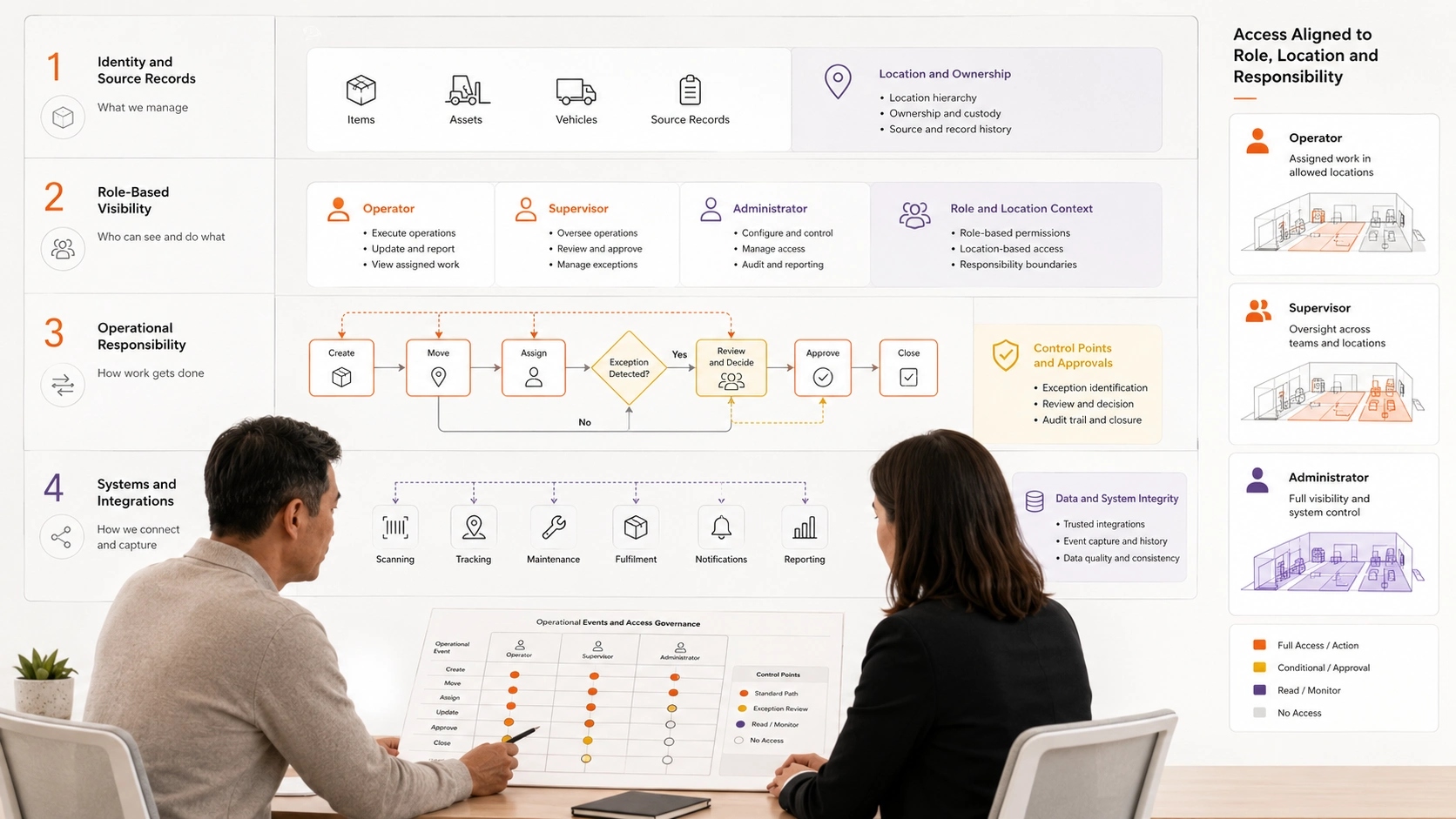
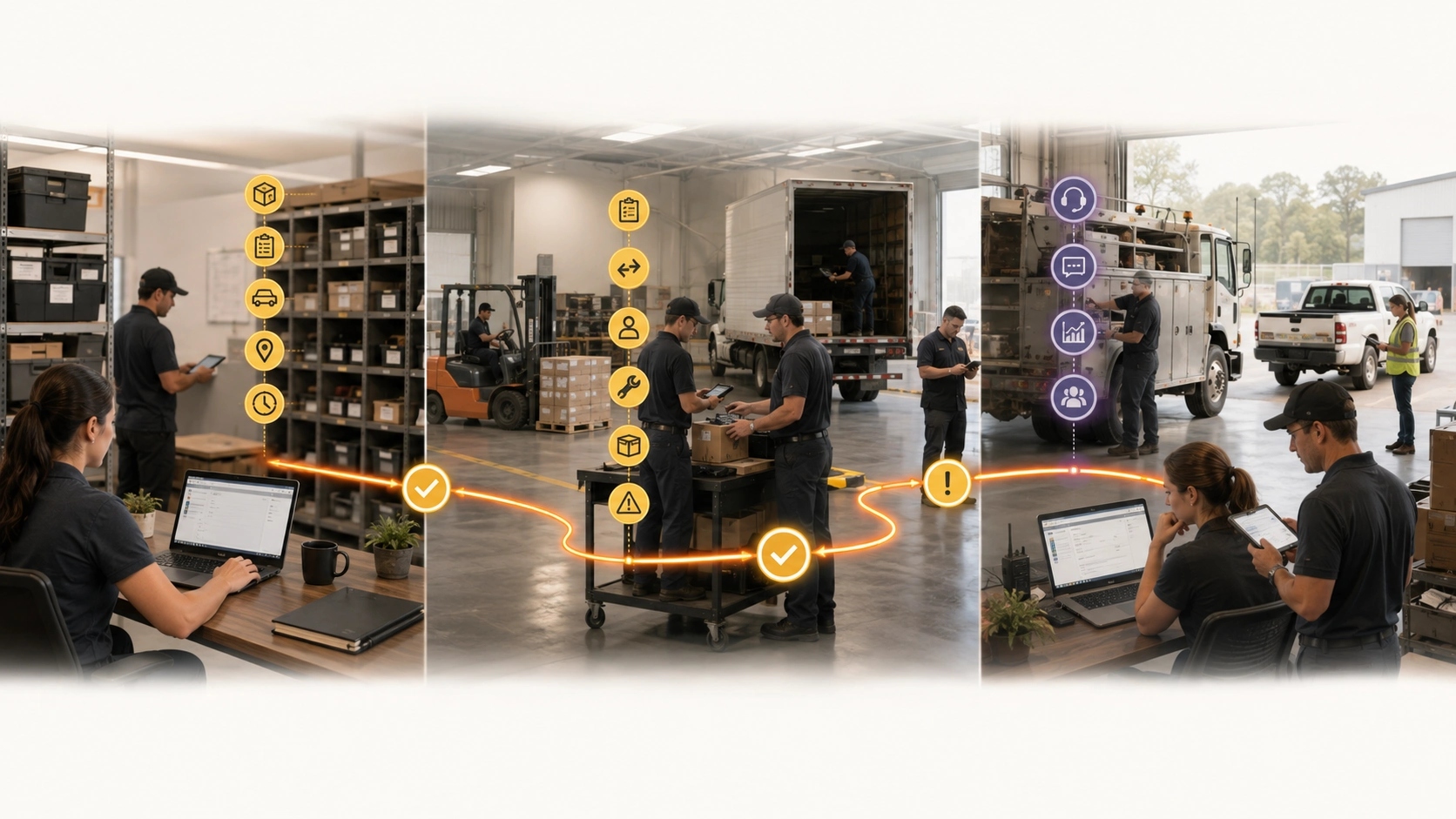
We begin with how receiving, putaway, replenishment, picking, packing, dispatch and returns move today. Workshops and evidence identify the people involved, source records, decisions, exceptions, delays and repeated manual work. The current system is reviewed as part of the process rather than treated as the process itself. We also document which records other teams depend on and where responsibility becomes unclear. This creates a practical requirements model that can be used to compare platforms or define custom scope without copying inefficient work into a new interface.
The solution is shaped around data ownership, roles, approvals, integrations and the controls the business has confirmed. For this page, the review may cover operator access, movement traceability, quality holds, batch or serial records, safety steps, audit logs and retention. We distinguish between platform capability and customer configuration because a certified product does not make every implementation compliant. Interfaces are designed with clear authentication, error handling and audit responsibility. Where sensitive data is involved, the system should collect and expose only what the approved user and purpose require.

Configuration or development is tested with representative data and real user scenarios before production cutover. The plan includes migration checks, permissions, integration failures, exception paths and business acceptance. Training is based on each role's actual work rather than a general feature tour. After launch, ownership for administration, support, changes and vendor coordination is made clear. The result should be traceable warehouse execution from dock to dispatch, with enough monitoring and feedback to improve the workflow after people begin using it every day.
A fixed industry taxonomy keeps every page, filter, and icon aligned while editors can still add useful short descriptions.
A warehouse management software company helps a business decide how receiving, putaway, replenishment, picking, packing, dispatch and returns should work inside one practical system. Flashyminds begins with the current workflow, data, roles, exceptions and integrations. We can recommend and implement a suitable established platform, improve an existing setup or develop a tailored solution when standard software cannot support the approved operating model. The engagement is defined around business use and ownership. It does not assume that replacing the current system or choosing the platform with the most features is automatically the right decision.
IMPROVE THE OPERATING SYSTEM
Share the current tools, workflow gaps, users, integrations and controls involved. We will help identify whether to implement, improve or develop the right system.