
Digital Marketing
Top Digital Marketing Company
GoodFirms · 2026
HYBRID APP DEVELOPMENT
Package suitable web product capability for mobile distribution with deliberate native access, offline behaviour, performance testing and store release ownership.
70+
Sites and Apps
4 to 6
Weeks for MVPs
95%
Client Retention
TRUSTED BY TEAMS ACROSS 18+ INDUSTRIES













Digital Marketing
GoodFirms · 2026
PPC Management
Clutch · 2026

PPC Management
Clutch · 2026

Web Development
TECHIMPLY · 2026

Digital Marketing
DesignRush · 2025

IT Service Management
Clutch · 2025

SEO Services
Clutch · 2025

Social Media Marketing
DesignRush · 2025

Web Development
DesignRush · 2025
BUILD CAPABILITIES
Hybrid delivery fits some products well, especially when web capability can be reused without compromising critical mobile behaviour.
Discuss Your BuildWEB TO MOBILE

Content led tools, forms, account journeys and many operational products can work well through a hybrid model. We assess interaction density, animations, background behaviour, offline requirements and device integrations before recommending it. A responsive website is not automatically ready to become a useful mobile application.
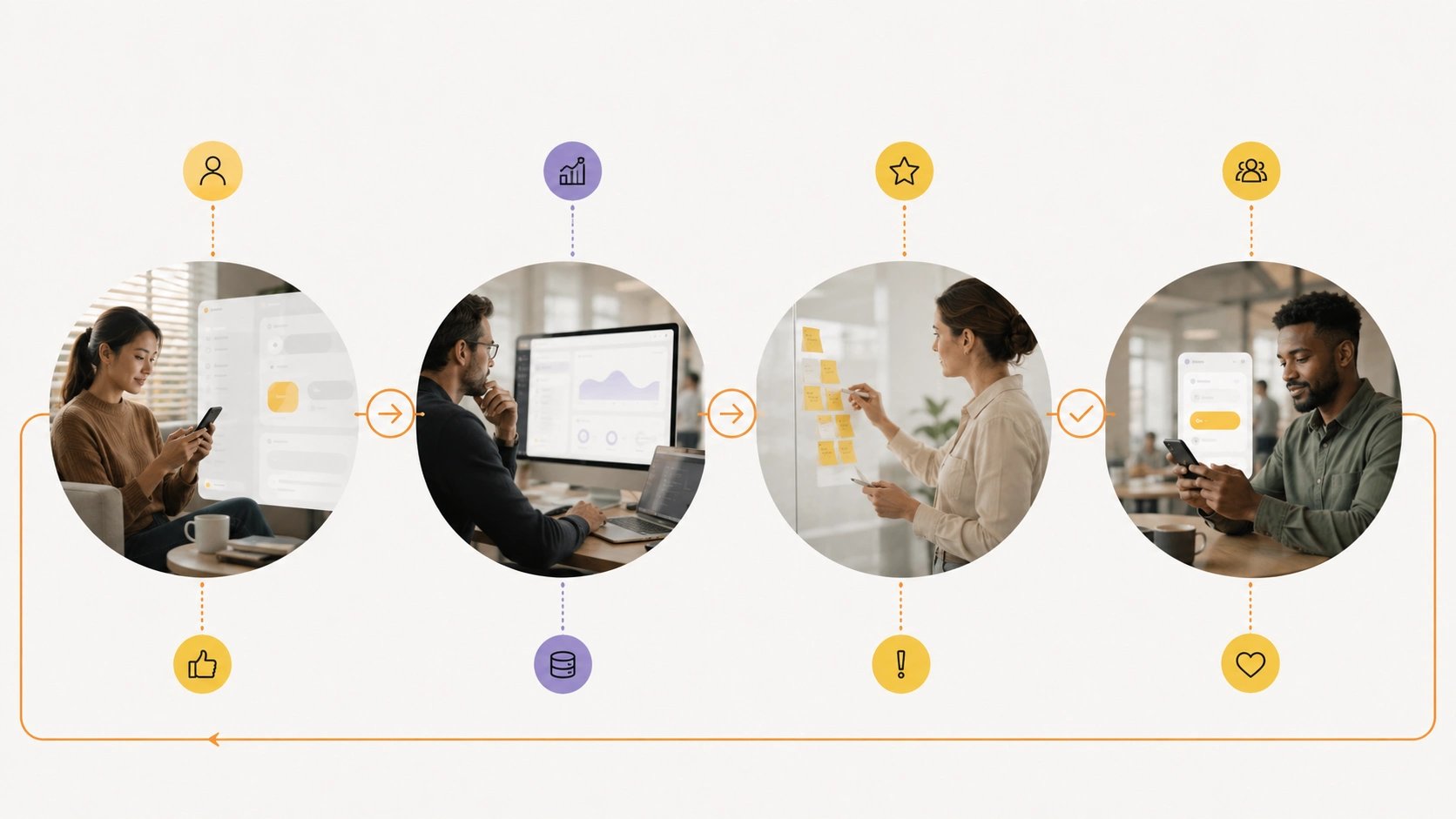
Navigation, safe areas, keyboard behaviour, loading, connectivity and platform controls need attention around the web experience. We plan how the application starts, resumes, updates and handles external links. The native container should support the product instead of simply displaying a desktop minded website inside a mobile shell.
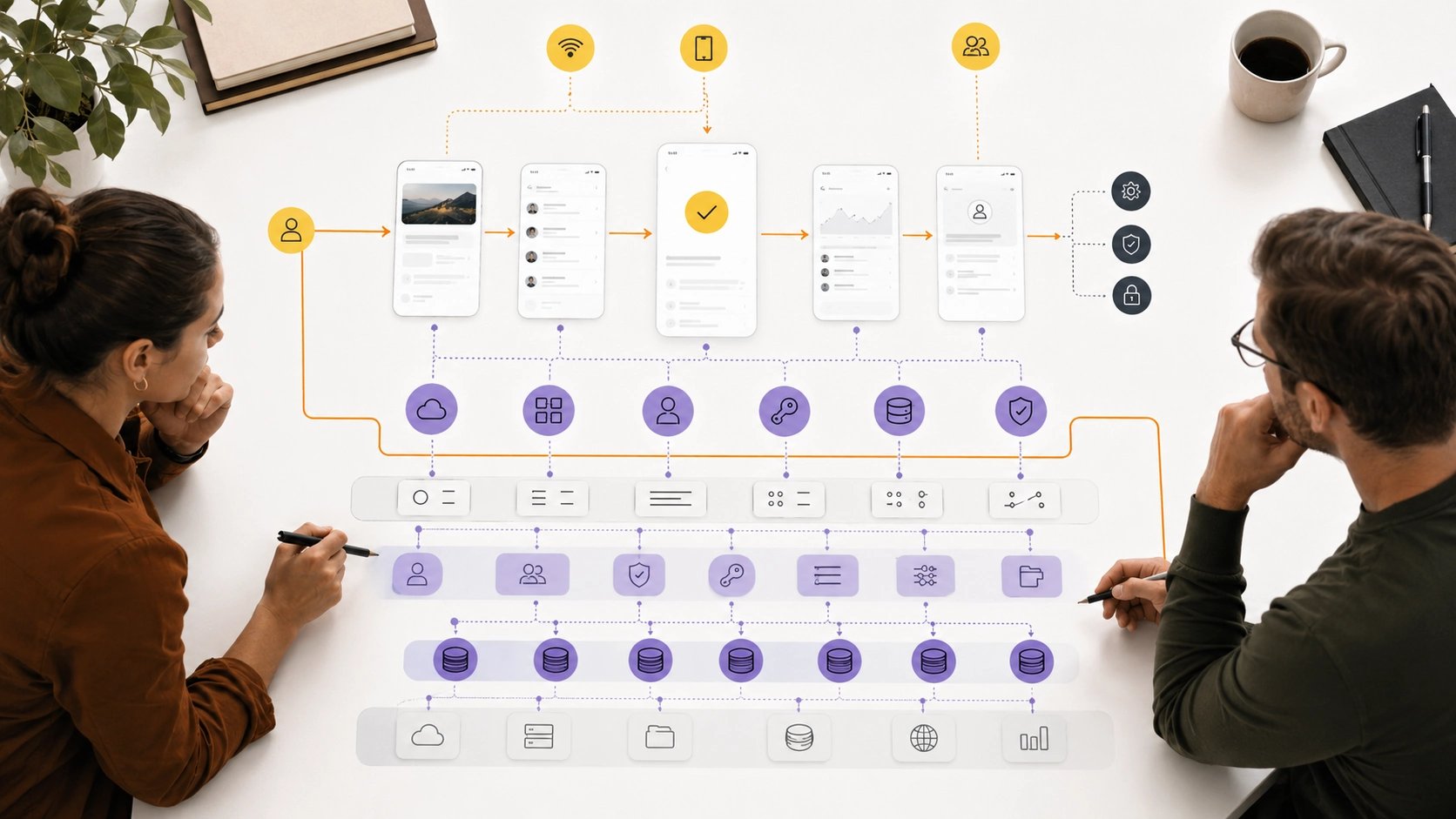
Hybrid applications rely on plugins or native code for device access. We evaluate support, permissions, platform versions and upgrade history for each critical integration. When a product depends heavily on unsupported or specialised native behaviour, a cross platform or native approach may create clearer ownership and lower long term risk.
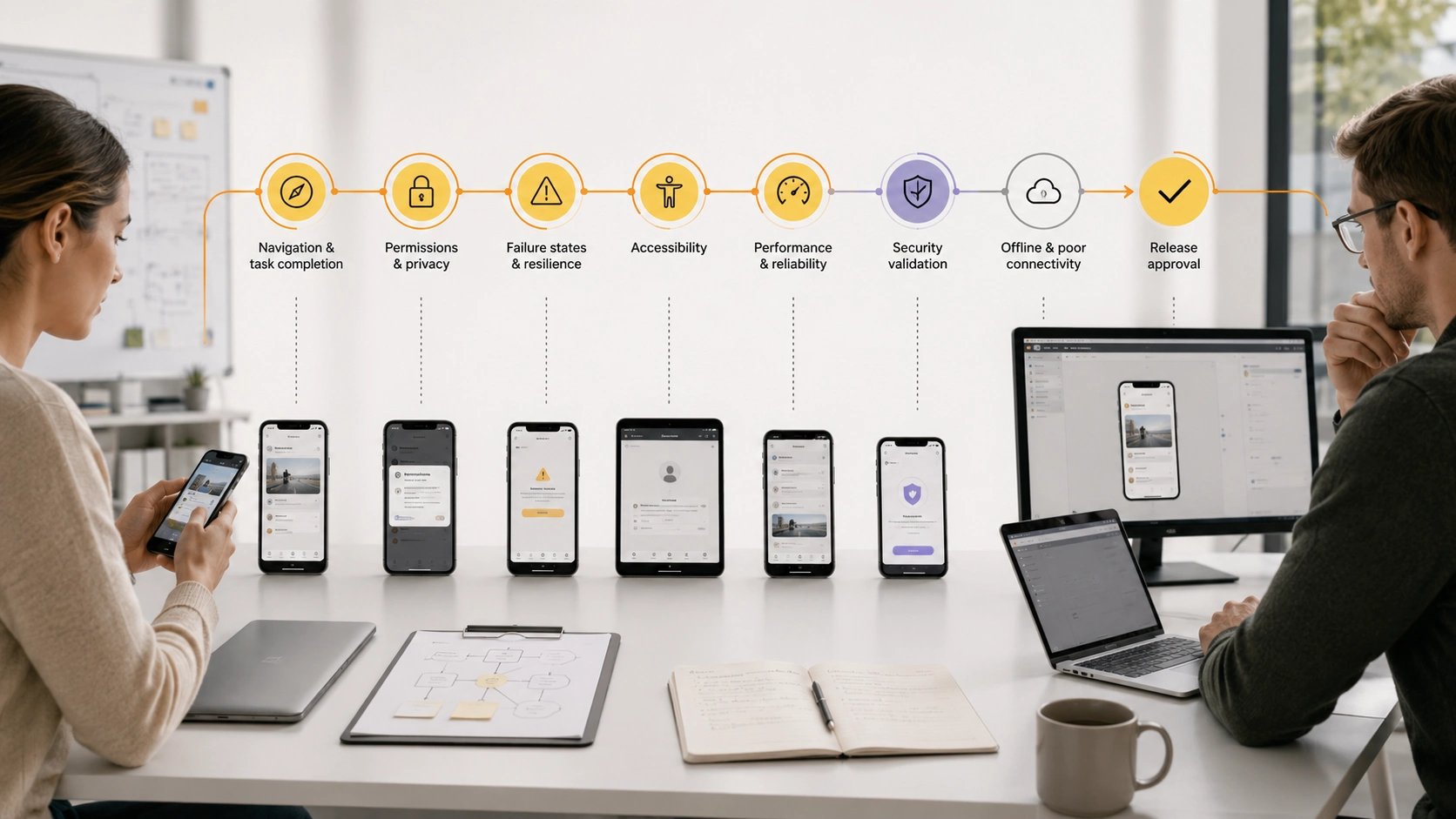
We test real devices, slower networks, startup, scrolling, memory, permissions and offline states before distribution. iOS and Android still require separate signing, platform configuration and store review. Maintenance must cover the web framework, native runtime, plugins and operating system changes rather than treating the app as one unchanged website bundle.
We select from the fixed development stack according to product experience, architecture, integrations, deployment, maintenance and the team responsible after launch.
43+
tools & platforms
Step 01 of 06
Review the existing web capability, mobile journeys, device services, offline needs, performance expectations and store requirements.
Step 01 of 06
Review the existing web capability, mobile journeys, device services, offline needs, performance expectations and store requirements.
Review the existing web capability, mobile journeys, device services, offline needs, performance expectations and store requirements.
The implementation remains focused on the product requirements that hybrid delivery can support responsibly.
Adapt suitable web product capability for focused use inside a mobile application container.
Use a maintained native runtime and platform projects where the chosen product stack supports it.
Connect approved camera, file, location, notification or secure storage capabilities.
Plan local data, action queues, recovery and clear feedback for interrupted connections.
Test startup, rendering, scrolling, memory and network behaviour on representative devices.
Configure native builds, signing, platform settings, submission inputs and controlled updates.

Verified on Google Reviews
“Absolutely Exceptional – There are truly no words to fully justify the incredible professionalism and unmatched work ethics that Flashyminds brought to our project. ”
Neeraj Pathania
Atulya Kanchi Camps
Co-founder

Verified on Sortlist
“Flashymind team was very cooperative and listened to every aspect and feedback in a very constructive way ensuring delivery abide expectations.”
Ashish Ranjan
Arja For Wildlife
Founder
Verified on Google Reviews
“Great team , I had an excellent experience working with flashyminds . Their team is responsive and committed to delivering results. Highly recommend. ”
Sravan
Edurights India
Managing Director
A fixed industry taxonomy keeps every page, filter, and icon aligned while editors can still add useful short descriptions.
Ecommerce Development
Aug 19, 2026 · 6 min read
A storefront creates sustainable growth only when product, inventory, pricing, account, order, fulfillment, return, and customer-service information remains consistent across the.
By Research Team
Read articleSEO
Aug 19, 2026 · 6 min read
Marketplace filters can create millions of URL combinations, so indexability should follow stable customer demand and useful landing-page value rather than every possible.
By Research Team
Read articleWeb Development
Aug 19, 2026 · 6 min read
A corporate website should help procurement and risk teams verify the company, capability, safety, quality, accessibility, delivery process, and responsible contacts before.
By Research Team
Read articleHybrid app development uses web technologies inside a native application container so one web oriented product can be distributed through mobile app stores and access selected device capabilities. A runtime such as Capacitor may connect the web layer with native platform services. The approach suits products whose main journeys work well through web rendering. It needs separate mobile design, testing and release work even when code is reused.
PLAN THE RIGHT BUILD
Share the product goal, users, current systems, required platforms, integrations, content readiness and release expectations. We will identify the clearest next step and the decisions needed before delivery.


