
Digital Marketing
Top Digital Marketing Company
GoodFirms · 2026
ANDROID APP DEVELOPMENT
Build Android products around adaptive layouts, stable state, layered architecture, network resilience, Play requirements and maintainable release ownership.
70+
Sites and Apps
4 to 6
Weeks for MVPs
95%
Client Retention
TRUSTED BY TEAMS ACROSS 18+ INDUSTRIES













Digital Marketing
GoodFirms · 2026
PPC Management
Clutch · 2026

PPC Management
Clutch · 2026

Web Development
TECHIMPLY · 2026

Digital Marketing
DesignRush · 2025

IT Service Management
Clutch · 2025

SEO Services
Clutch · 2025

Social Media Marketing
DesignRush · 2025

Web Development
DesignRush · 2025
BUILD CAPABILITIES
Android delivery must account for device size, operating context, data reliability and the product behaviour users need.
Discuss Your BuildROBUST ANDROID PRODUCT
A useful Android interface should respond to window size, orientation and device posture without losing the user's progress. We design reusable components and adaptive arrangements for the devices in scope. This is more reliable than creating one fixed phone layout and hoping it scales to tablets, foldables or changed window sizes.
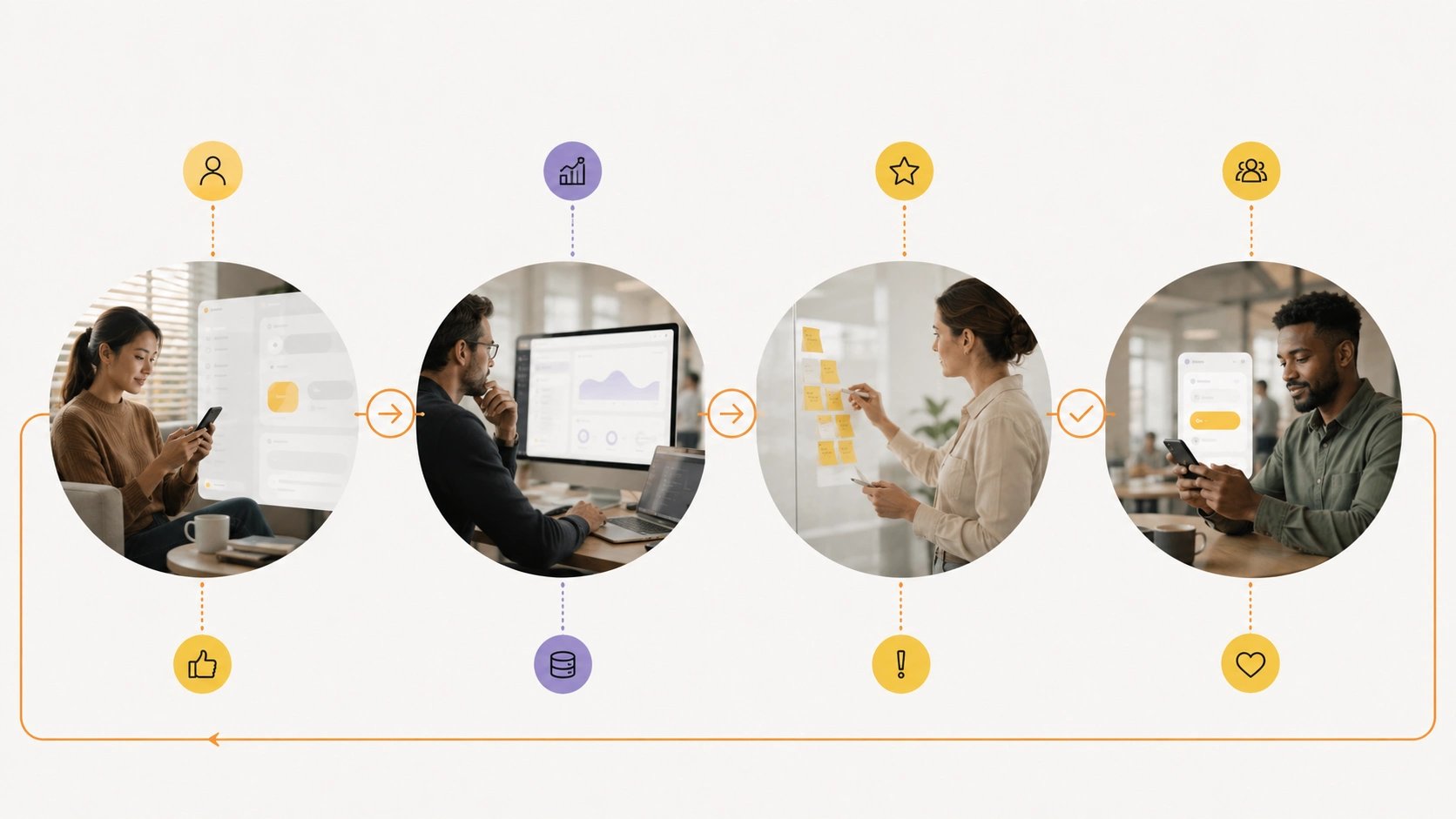
Screens become easier to test and maintain when the interface reflects clear application state instead of owning business data. We separate presentation, product logic and data responsibilities according to the product's complexity. That structure helps the app survive configuration changes, handle errors consistently and avoid tightly coupled features.
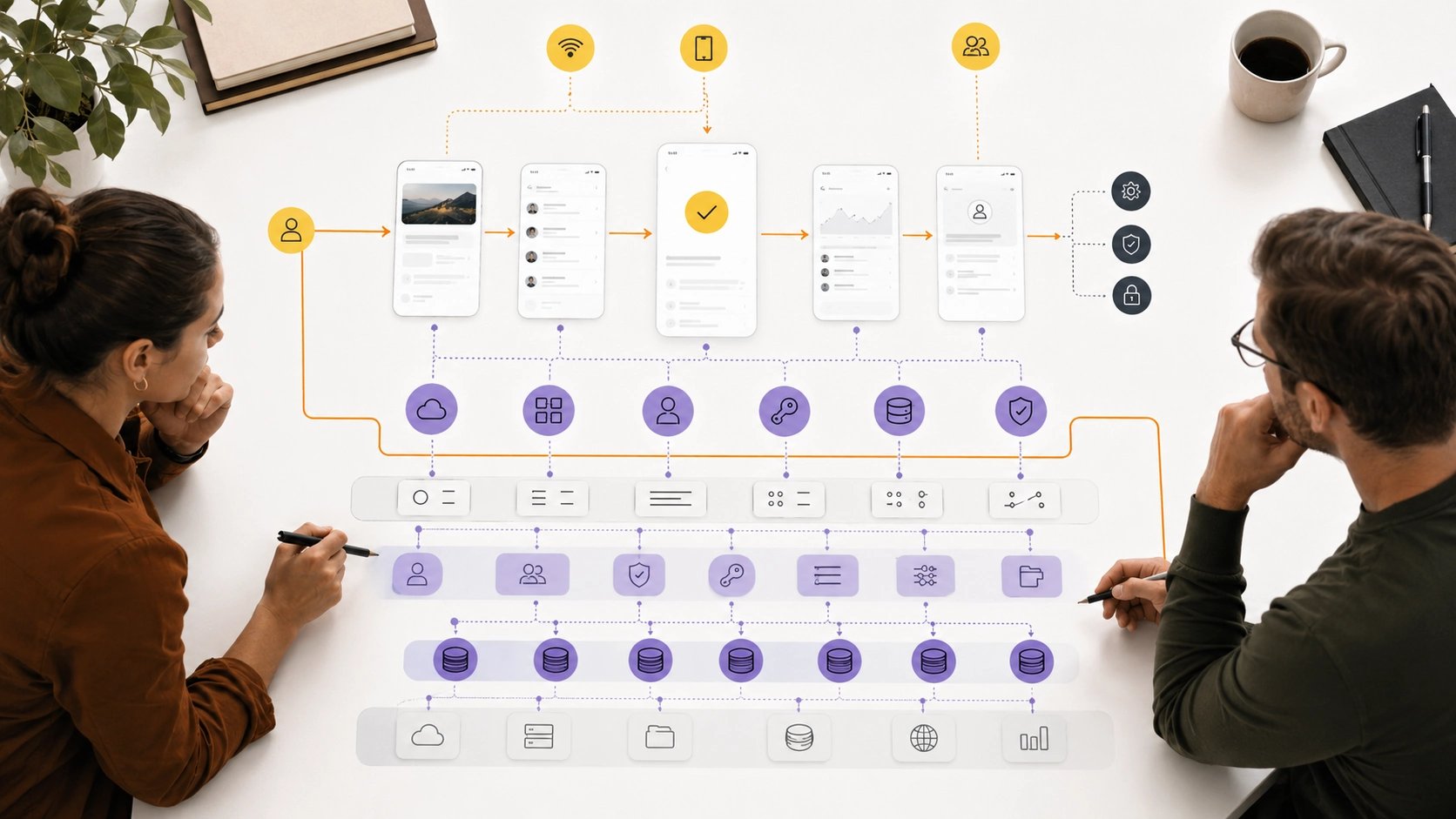
Mobile users move through weak or interrupted connections. We decide which data should be available locally, how writes are queued, how conflicts are resolved and what feedback appears when an action cannot complete. Offline behaviour is not automatically needed everywhere, but critical tasks should not fail without a deliberate response.
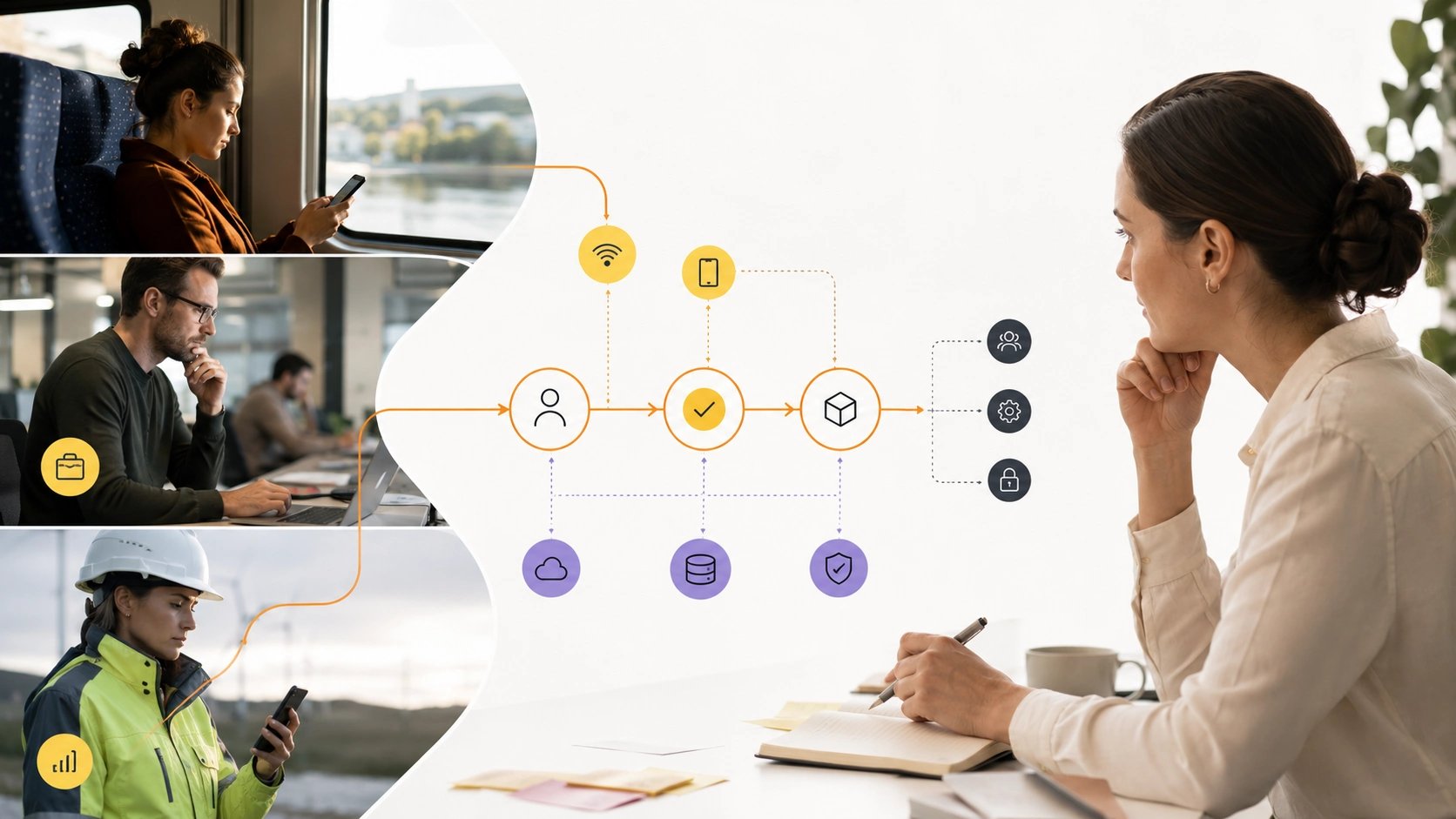
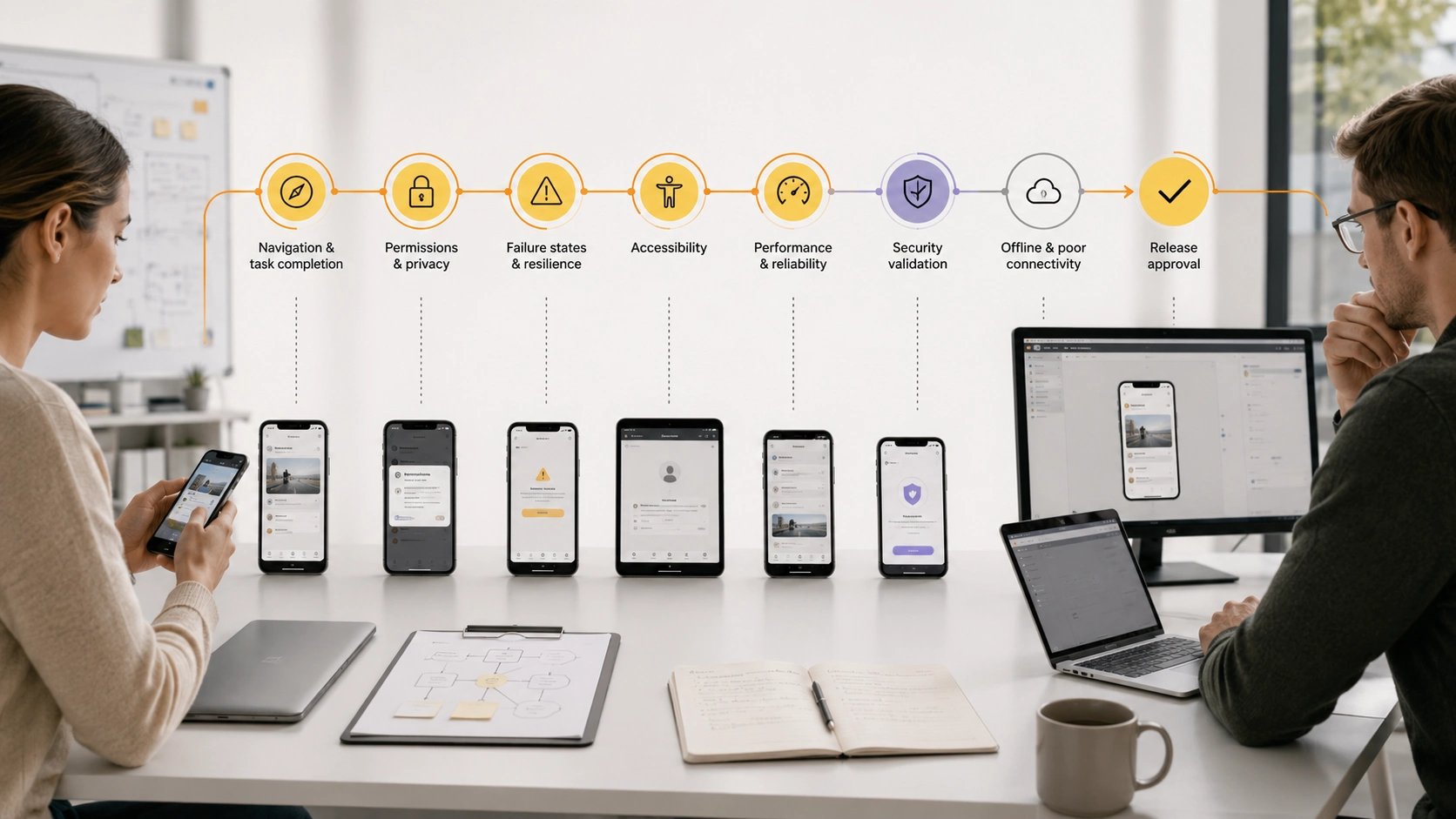
Android delivery includes device testing, accessibility, permissions, target requirements, signing and Play release controls. We verify the versions and hardware that matter to the audience, then prepare internal, closed or staged testing as appropriate. Ongoing maintenance accounts for operating system, SDK and store requirement changes after launch.
We select from the fixed development stack according to product experience, architecture, integrations, deployment, maintenance and the team responsible after launch.
43+
tools & platforms
Step 01 of 06
Clarify users, devices, priority journeys, connectivity, required capabilities, data sensitivity and the intended release model.
Step 01 of 06
Clarify users, devices, priority journeys, connectivity, required capabilities, data sensitivity and the intended release model.
Clarify users, devices, priority journeys, connectivity, required capabilities, data sensitivity and the intended release model.
Capabilities are selected around the product and audience rather than treated as a standard checklist.
Build maintainable Android product logic using current platform practices and clear code ownership.
Create reusable interface components and adaptive states for supported Android form factors.
Plan repositories, caching, synchronisation and failure behaviour around critical product tasks.
Integrate agreed location, camera, notifications, Bluetooth or background functions responsibly.
Support scalable text, clear focus, touch targets, contrast and assistive technology testing.
Prepare signing, testing tracks, store inputs, compatibility checks and controlled updates.

Verified on Google Reviews
“Absolutely Exceptional – There are truly no words to fully justify the incredible professionalism and unmatched work ethics that Flashyminds brought to our project. ”
Neeraj Pathania
Atulya Kanchi Camps
Co-founder

Verified on Sortlist
“Flashymind team was very cooperative and listened to every aspect and feedback in a very constructive way ensuring delivery abide expectations.”
Ashish Ranjan
Arja For Wildlife
Founder
Verified on Google Reviews
“Great team , I had an excellent experience working with flashyminds . Their team is responsive and committed to delivering results. Highly recommend. ”
Sravan
Edurights India
Managing Director
A fixed industry taxonomy keeps every page, filter, and icon aligned while editors can still add useful short descriptions.
Ecommerce Development
Aug 19, 2026 · 6 min read
A storefront creates sustainable growth only when product, inventory, pricing, account, order, fulfillment, return, and customer-service information remains consistent across the.
By Research Team
Read articleSEO
Aug 19, 2026 · 6 min read
Marketplace filters can create millions of URL combinations, so indexability should follow stable customer demand and useful landing-page value rather than every possible.
By Research Team
Read articleWeb Development
Aug 19, 2026 · 6 min read
A corporate website should help procurement and risk teams verify the company, capability, safety, quality, accessibility, delivery process, and responsible contacts before.
By Research Team
Read articleAndroid app development services can include product discovery, adaptive UX, Kotlin engineering, backend APIs, local data, device integrations, analytics, notifications, testing, Play submission and support. Flashyminds defines the supported devices, versions and connectivity assumptions before development. The scope also identifies who owns the Google Play account, signing, store information, infrastructure and future release decisions.
PLAN THE RIGHT BUILD
Share the product goal, users, current systems, required platforms, integrations, content readiness and release expectations. We will identify the clearest next step and the decisions needed before delivery.


